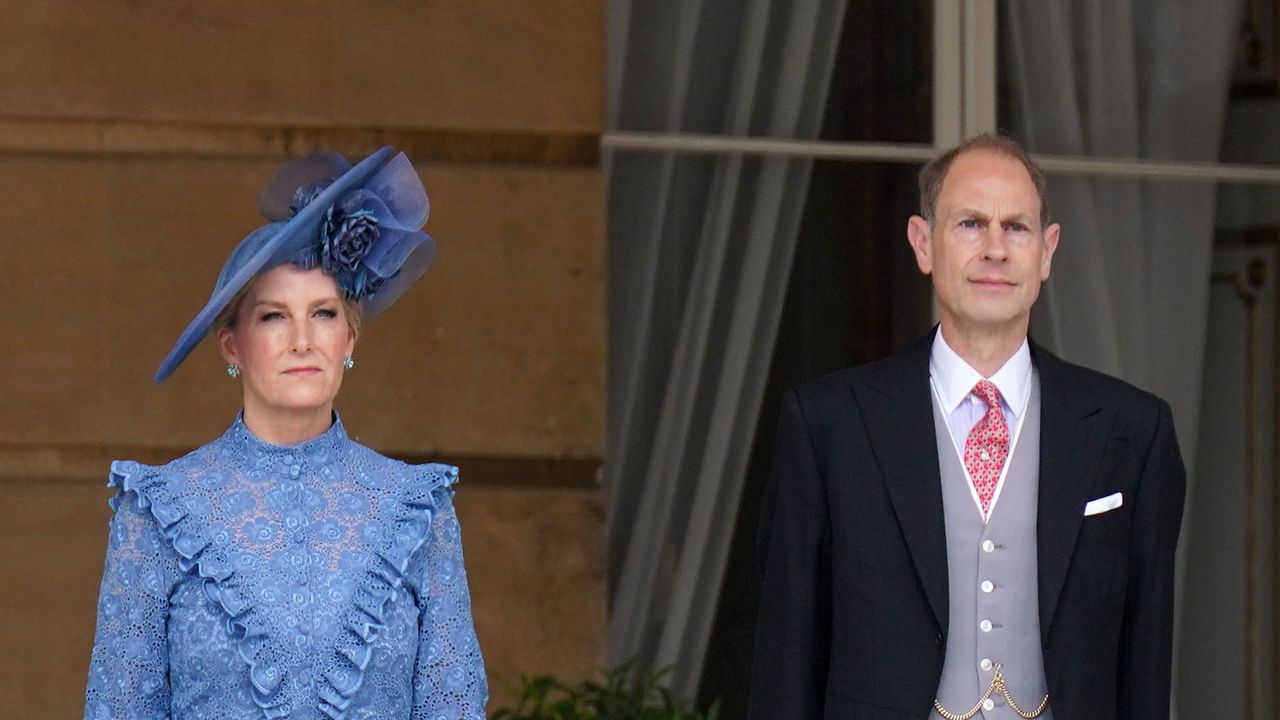
From Succession Changes to Missing Titles: Navigating the Unique Paths of Prince Edward's Children
The British royal family, with its rich history and evolving traditions, often presents fascinating narratives, especially when it comes to the next generation. A common point of interest and occasional confusion arises when discussing the
Prince Edward children. This isn't a singular group, however, as there are two prominent Prince Edwards whose descendants hold unique positions within the royal landscape. This article will delve into the distinct paths of the children of *Prince Edward, Duke of Kent*, and *Prince Edward, Duke of Edinburgh*, exploring the intriguing reasons behind their varying titles, roles, and places in the line of succession. From ancient laws influencing religious conversions to modern agreements shaping public profiles, their stories offer a compelling glimpse into the adaptability and enduring legacy of the monarchy.
Prince Edward, Duke of Kent: A Legacy of Choice and Succession
Prince Edward, Duke of Kent, a cousin to Queen Elizabeth II and now to King Charles III, has been a steadfast presence within the royal family for decades. He and his wife, Katharine, Duchess of Kent, have three children whose lives illustrate how personal choices and historical statutes can profoundly impact royal standing. Like many descendants of King George V, they typically use the surname Windsor, though courtesy titles often take precedence. For a deeper dive into the broader family context, consider exploring
Who are the Duke of Kent's Children? Succession & Royal Lives.
George Windsor, Earl of St. Andrews
Born in 1962, George Windsor, Earl of St. Andrews, is the eldest of the Duke of Kent's children. At 61, he stands as the 43rd in the line of succession. He is married to Sylvana Tomaselli, a distinguished Canadian historian, and together they have three children:
- Edward Windsor, Lord Downpatrick (b. 1988): The heir apparent to the Dukedom of Kent.
- Lady Marina Windsor (b. 1992): Known for her private life and distinctive style.
- Lady Amelia Windsor (b. 1996): A model and socialite, often featured in fashion publications, bringing a contemporary flair to the royal lineage.
Lord St. Andrews holds the respected position of Chancellor of the University of Bolton, demonstrating a commitment to education and public service. His children, while part of the extended royal family, navigate lives that blend traditional ties with modern careers and public personas.
Lady Helen Taylor
Lady Helen Taylor, born in 1964, is the only daughter of the Duke and Duchess of Kent. Now 59, she is 48th in the line of succession. She is married to Timothy Taylor, an art dealer, and they have four children:
- Columbus Taylor (b. 1994)
- Cassius Taylor (b. 1996)
- Eloise Taylor (b. 2003)
- Estella Taylor (b. 2004)
Lady Helen carved out a successful career in the fashion world, notably serving as a fashion ambassador for Giorgio Armani until 2018. Her career choice highlighted a unique path for a royal, balancing high-profile work with family life. She famously remarked, "It’s an absolute dream to have a job like this. I travel a lot and I’m able to spend the majority of my time with my children," underscoring her ability to pursue personal and professional passions.
Lord Nicholas Windsor: A Significant Succession Shift
The youngest of the
Prince Edward children from the Duke of Kent's line, Lord Nicholas Windsor, born in 1970, has perhaps the most distinct story regarding succession. He is married to Paola Doimi de Lupis de Frankopan, and they have three sons:
- Albert Windsor (b. 2007)
- Leopold Windsor (b. 2009)
- Louis Windsor (b. 2014)
Lord Nicholas's path diverged significantly from his siblings due to his conversion to Catholicism in 2001. This decision, mirroring his mother's earlier conversion (which received Queen Elizabeth II's approval), meant he forfeited his place in the line of succession. Under the historical Act of Settlement 1701, any royal who marries a Catholic or converts to Catholicism is excluded from inheriting the throne. While this rule was partially amended in 2013 to allow royals to marry Catholics without losing their place, conversion to Catholicism still results in forfeiture. His wedding to Paola at the Vatican was a historic occasion, marking the first time a member of the British royal family married there. Lord Nicholas is also deeply involved in Catholic organizations and is a known anti-abortion activist. His story powerfully illustrates the ongoing influence of historical legislation on modern royal lives and choices.
Prince Edward, Duke of Edinburgh: A Modern Approach to Royal Titles
Shifting to a different branch of the family, Prince Edward, Duke of Edinburgh (formerly Earl of Wessex), is the youngest child of Queen Elizabeth II and Prince Philip. He and his wife, Sophie, Duchess of Edinburgh (formerly Countess of Wessex), are often seen at significant royal events and are much in the public eye. Their children, however, hold titles that often perplex the public: they are not styled as Prince or Princess. For an in-depth explanation of this fascinating decision, you can read
Why Do Prince Edward's Children Not Have Prince Titles?
Lady Louise Mountbatten-Windsor
Born on November 8, 2003, Lady Louise Alice Elizabeth Mary Mountbatten-Windsor is the elder of the two
Prince Edward children from this royal couple. She was the last royal child to wear the original royal christening gown when she was baptised in 2004, a piece of history that underscores her place in the family's lineage. Lady Louise attended St George's School, Windsor Castle, before moving to St Mary's School Ascot in 2017, and later to the University of St Andrews, following in the footsteps of Prince William and Catherine. At just seven years old, she played a role as a bridesmaid in the wedding of Prince William and Kate Middleton in 2011, making her first significant public appearance.
James, Earl of Wessex
James Alexander Philip Theo Mountbatten-Windsor, born on December 17, 2007, is the younger child and only son of Prince Edward and Sophie. Following his father's elevation to Duke of Edinburgh, James inherited the subsidiary title of Earl of Wessex. He was baptised in 2008 in the Private Chapel of Windsor Castle. James currently attends Eagle House School, a preparatory school in Berkshire. Both James and Lady Louise accompanied their parents on their first overseas engagement to South Africa in April 2015, showcasing their early introduction to royal duties. The family resides at Bagshot Park in Surrey, with Buckingham Palace serving as their official London residence.
Why No Prince/Princess Titles?
The reason Lady Louise and James do not hold the titles of Prince and Princess dates back to their parents' wedding in 1999. Upon his marriage, Prince Edward, with the consent of Queen Elizabeth II, agreed that any children he had would *not* be styled as Prince or Princess. Instead, they would be known as children of an Earl, with Lady Louise receiving the courtesy title of a Duke's daughter, and James taking the courtesy title of Viscount Severn (until his father became Duke of Edinburgh). This decision was a deliberate choice, reflecting Prince Edward and Sophie's desire for their children to have a relatively more "normal" upbringing, shielded from some of the pressures associated with full royal titles. It also aligns with a broader trend towards a "slimmed-down monarchy," where fewer royals carry full titles and public duties. Despite this, they remain an integral part of the royal family, appearing at major events and holding places in the line of succession.
The Broader Implications: Modern Royalty and Future Paths
The stories of these two sets of
Prince Edward children, while distinct, collectively illuminate the evolving dynamics of the British monarchy. On one hand, the children of the Duke of Kent highlight the enduring power of ancient laws and the personal sacrifice sometimes involved in matters of faith versus succession. Lord Nicholas's situation serves as a potent reminder that despite centuries, certain statutes remain unyielding unless formally changed. His siblings, George and Helen, also demonstrate a balance between inherited titles and pursuing individual professional paths, whether in academia, fashion, or the arts.
On the other hand, Lady Louise and James, the children of the Duke of Edinburgh, embody a proactive approach to modern royalty. Their parents' decision to forgo traditional princely titles for them was a forward-thinking move, perhaps anticipating a future where the weight of a full royal title might be more of a burden than a privilege. This choice has allowed them a degree of privacy and the opportunity to develop their own identities outside the intense scrutiny that often accompanies senior royal positions, while still fulfilling certain royal duties as they mature.
These narratives offer valuable insights into the careful navigation required of those born into the royal family in the 21st century. It's a delicate balance between honouring tradition, adhering to legal frameworks, and adapting to contemporary societal expectations. The varying paths of these royal cousins underscore the complexity and dynamism inherent in the institution, as it strives to remain relevant while preserving its heritage.
Conclusion
The diverse experiences of the
Prince Edward children—both from the Duke of Kent's line and the Duke of Edinburgh's—offer a compelling look into the multifaceted nature of modern British royalty. From the solemn impact of religious conversion on the line of succession to the progressive decision to opt for more modest titles, their journeys reflect the ongoing dialogue between tradition and modernity within the monarchy. Each child, whether a Duke's son navigating academic life, a Lady forging a path in fashion, or a younger royal growing up with a unique title, contributes to the rich tapestry of the royal family, demonstrating its capacity for evolution while remaining a focal point of national interest and enduring legacy.